

How It Works
From existing water to a coordinated community resource
Our seven-step method connects source assessment, physical access, and shared planning. It gives communities a clear path for evaluating supplemental water resources before a potential pilot.
The connection
What is a draft hydrant?
A draft hydrant is a fixed pipe and connection through which a fire engine’s pump can draw water from a suitable pool, pond, or other source. The connection provides access; the responding pump draws the water. Site conditions and equipment compatibility matter.
Connection provides access
The responding pump draws the water.
Suitable source
A pool, pond, or other existing water source.
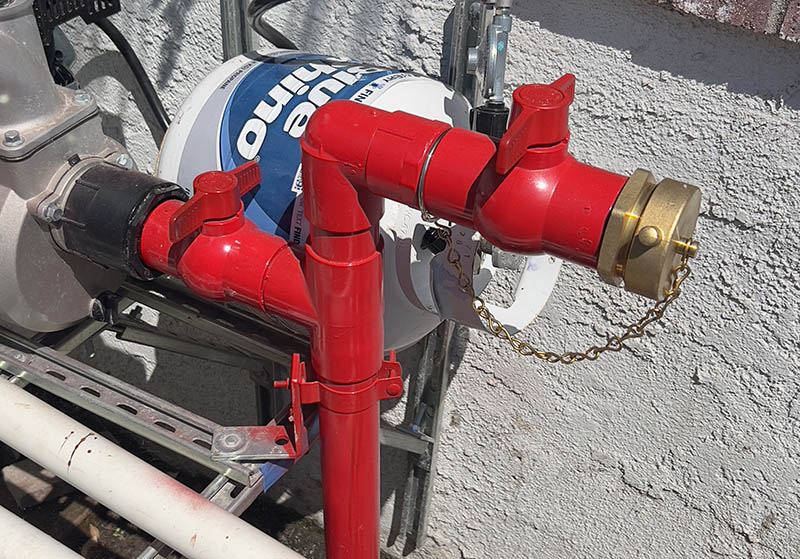
Draft hydrant plumbing schematic
- 12″ PVC Pipe
- 22″ PVC 90°
- 32″ PVC Tee
- 42″ PVC Valve
Seven steps
The seven steps
1 · Locate potential sources
Identify existing pools and other water sources in the proposed area. Consider their location alongside existing hydrants and community access routes.
2 · Evaluate site suitability
Review available water, vehicle access, terrain, defensible-space conditions, and hazards. Identify what needs technical assessment or local fire-authority review.
3 · Confirm owner participation
Discuss consent, access arrangements, costs, information visibility, and ongoing responsibilities so owners can make an informed decision.
4 · Plan and complete the retrofit
For suitable sites, coordinate the required review and installation work with qualified professionals. Prepare a drafting connection appropriate to the source and intended equipment.
5 · Check and document readiness
Establish the testing and inspection needed to evaluate the installation. Record results, limitations, and any outstanding work before presenting a source as ready for use.
6 · Map and coordinate the information
Organize location, access, consent, and readiness records. Work with the relevant fire agency to determine how that information could support pre-incident planning.
7 · Maintain and review
Set responsibilities for inspections, testing, maintenance, and record updates. Reassess participation when site conditions, equipment, ownership, or access arrangements change.
Status
Where we are today
We are seeking pilot conversations to refine this approach with communities and fire-service stakeholders. The private Registry demonstration uses fictitious records to show how source information and controlled mapping could work. It is not a live emergency-response system.

Next step
Start with your community
Tell us where you want to explore the approach and what your community needs to understand.